
Watching someone you love struggle with addiction is its own kind of exhausting. You’ve probably already tried talking to them, maybe more than once. You’ve replayed conversations in your head, wondering what you should have said differently. You might be lying awake at night wondering if tonight is the night something goes seriously wrong.
If that’s where you are right now, you’re not overreacting, and you’re not alone. Families across Huntington and the Tri-State region are asking the same question you are: how do you actually get someone into rehab when they haven’t asked for help themselves, or when every conversation ends in a fight?
This guide walks through that process step by step, from recognizing the signs to understanding what a family can and can’t legally do in West Virginia, to what actually happens once your loved one is ready to walk through the door.

How Do You Know When a Loved One Needs Rehab?
Families often sense something is wrong long before they can name it. The signs aren’t always dramatic. Sometimes it’s a slow drift: missed calls, canceled plans, a job that suddenly ended, money that disappears without explanation. Other times it’s more visible: mood swings, physical changes, withdrawal from people they used to be close to, or a defensiveness that appears the moment substance use comes up in conversation.
One pattern worth naming directly, because families frequently notice it and don’t know what to do with it: anxiety or depression often shows up before the substance use becomes obvious, or alongside it in a way that’s hard to untangle. A person struggling with an undiagnosed mental health condition may turn to alcohol or drugs to manage feelings they don’t have other tools for yet.
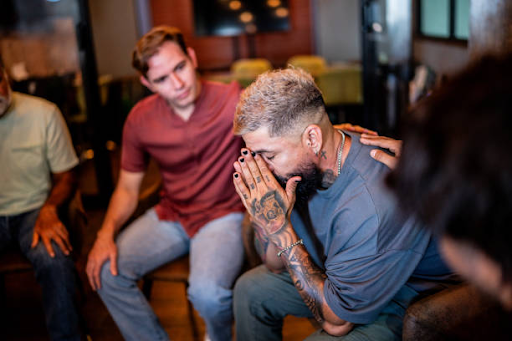
This is called a co-occurring disorder, and it matters because treating the substance use alone, without addressing what’s underneath it, tends not to hold. If your loved one has always seemed anxious, low, or “not quite themselves” even before the drinking or drug use became obvious, that’s worth mentioning during any evaluation, not something to set aside as a separate issue.
Practically speaking, rehab becomes worth pursuing when substance use is affecting someone’s health, safety, relationships, or ability to function, and when they’ve been unable to stop or cut back on their own despite wanting to, or despite real consequences piling up. You don’t need a formal diagnosis to start looking into options. You need a pattern that’s causing harm and isn’t improving.
How Do You Talk to Someone About Going to Treatment?
Timing and tone matter more than the specific words you choose. Conversations about treatment tend to go worse when someone is actively intoxicated, in the middle of a crisis, or being confronted in front of a crowd. They tend to go better when the person is relatively calm, sober in the moment, and not feeling cornered.
Lead with what you’ve observed and how it’s affected you, rather than labels or accusations. “I’ve noticed you’ve missed the last three family dinners, and I’m worried about you” lands very differently than “you’re an addict and you need help.” Person-first language matters here, not as a formality, but because how you talk about someone shapes whether they feel safe enough to hear you. Nobody moves toward help when they feel like they’re being defined by the worst thing happening in their life.
Expect resistance, denial, or anger, even in a calm conversation. That reaction is common and doesn’t mean the conversation failed. Addiction affects judgment and self-awareness in ways that make it genuinely difficult for someone to see their own situation clearly, which is part of why the conversation may need to happen more than once. Plant the seed, stay calm, and resist the urge to argue someone into agreement in a single sitting.
Should You Stage a Formal Intervention?
Sometimes a single conversation isn’t enough, and a family decides to bring several people together in a structured way. A formal intervention, ideally guided by a professional interventionist, can work well when it’s planned carefully: specific, non-judgmental examples from each person, a clear and specific ask, and a plan already in place for what happens if the person says yes that day.
Interventions can also backfire when they’re poorly planned, feel like an ambush, or involve people the individual doesn’t trust or feel safe around. If you’re considering this route, working with a professional who has experience facilitating interventions is worth the investment, both for structure and for managing the emotions in the room, including your own. An intervention is not the only path into treatment, and it’s not the right fit for every family or every situation. It’s one tool among several.
Can You Force Someone Into Rehab in West Virginia?
This is one of the hardest and most misunderstood questions families ask, so it deserves a careful, honest answer rather than a simplified one.
In general terms, West Virginia law does allow for a process, sometimes referred to as involuntary commitment or the mental hygiene process, through which a family member, physician, or law enforcement officer can petition a court when someone’s substance use disorder is believed to make them a danger to themselves or others.
If the court finds probable cause, a hearing follows, and a judge decides whether involuntary treatment is warranted. This is a real legal process with real thresholds, not something that can be initiated simply because a family disagrees with someone’s choices or is frustrated with the situation.
Because this involves the court system, has specific legal criteria that must be met, and can change depending on recent legislative updates, this is not something to navigate based on general information alone. If you believe your loved one may meet the threshold for involuntary treatment because they are in danger of hurting themselves or someone else, the appropriate next step is to speak with an attorney or contact your local circuit court or mental hygiene commissioner directly, who can walk you through the current legal requirements and process in your county.
What’s true in nearly every case, legal pathway or not, is that treatment tends to work better and last longer when the person engages with it willingly, even if that willingness only shows up after a long period of resistance. A legal path may be appropriate in a genuine safety crisis. It is rarely the first or only step families should consider.

What Is Enabling, and How Is It Different From Supporting?
This is one of the most painful distinctions families have to sit with, because enabling almost always comes from love, not carelessness.
Supporting someone means helping them move toward recovery: encouraging treatment, attending therapy sessions with them if invited, learning about addiction so you understand what they’re facing, and holding boundaries even when it’s uncomfortable. Enabling means protecting someone from the natural consequences of their substance use in ways that unintentionally make it easier for the use to continue: covering for missed work, repeatedly providing money without knowing where it goes, making excuses to other family members, or avoiding the subject entirely to keep the peace.
The line between the two isn’t always obvious in the moment, and most families cross it at some point without realizing it, often because the alternative feels unbearable. A useful question to ask yourself before stepping in is simple: is this action helping my loved one move toward treatment, or is it making today more comfortable at the cost of tomorrow? There’s no shame in having enabled someone in the past. Recognizing it now is what allows things to shift.
What Can Families Do to Prepare?
Before your loved one is ready to say yes, there’s real, concrete work a family can do that shortens the distance between “willing” and “admitted.”
Start by understanding what insurance or Medicaid coverage is available, since knowing the financial picture removes one major point of hesitation once someone agrees to treatment. Most treatment providers, HAWC included, can verify insurance benefits over the phone before any commitment is made, so this doesn’t have to be figured out alone or in advance.
It also helps to know what a pre-assessment actually involves, because families are often the ones making that first call. Admissions teams typically ask about the substance or substances involved, how long the use has gone on, any prior treatment attempts, current living situation, and whether there are any co-occurring mental health concerns, including the anxiety or depression mentioned earlier in this guide. Having rough answers ready, even if you’re not certain of every detail, speeds up the process considerably and reduces how many times your loved one has to retell a painful history to different people.
Finally, prepare yourself for the fact that “yes” might come suddenly, sometimes after a crisis, sometimes out of nowhere on an ordinary day. Having the insurance question answered and the first call already made means your family can move quickly when that window opens, instead of scrambling while it’s closing.
How Does HAWC Involve Families in the Recovery Process?
Recovery doesn’t happen in isolation, and neither does the work families do around it. Once someone begins inpatient treatment with us, care extends beyond the individual in treatment to include the family system they’re returning to, because recovery that ignores the home environment tends to be fragile.
Families are typically involved through structured communication as treatment progresses, education about addiction and co-occurring conditions so loved ones understand what recovery actually requires, and guidance on how to support someone as they move from inpatient treatment into outpatient treatment, whether that means recovery housing through one of our affiliate partners or community sober living programs, or returning home while continuing treatment with us. Family involvement looks different at each stage, and the level and type of contact is something our admissions and clinical staff will walk you through directly, since it depends on your loved one’s specific treatment plan and what’s clinically appropriate at each point in their care.
If you’re not sure where your family fits into that process yet, that’s a normal place to start from. Most families don’t know what their role should look like until someone walks them through it.
FAQs
What if they refuse to go?
This is one of the most common and most painful situations families face, and it doesn’t mean nothing can be done. You can’t force someone into treatment simply by wanting it for them badly enough, and repeated pressure sometimes pushes people further away rather than closer to help. What you can do is continue to state clearly that help is available when they’re ready, maintain boundaries that protect your own wellbeing in the meantime, and avoid enabling behaviors that remove urgency from the situation. Refusal today is not necessarily refusal forever. Many people who eventually enter treatment refused it, sometimes more than once, before they said yes.
What if they relapse after treatment?
Relapse is a real possibility, not a sign that treatment failed or that your loved one didn’t try hard enough. Addiction is a chronic condition, and setbacks are a common part of long-term recovery for many people, not the exception. If relapse happens, the most useful response is usually the same one that got them into treatment the first time: calm, clear communication about what help is available now, without shame attached to the setback itself.
How fast can admission happen?
Timelines vary depending on individual circumstances, insurance verification, and whether medical detox needs to be coordinated first, but the pre-assessment process is designed to move quickly once a family or individual reaches out, precisely because that window of willingness can be narrow. Calling admissions directly is the fastest way to get an accurate answer for your specific situation.
Should other family members be part of the first phone call?
Not necessarily. Often, one family member takes the lead on making initial contact and gathering information, then shares it with others afterward. What matters more than who makes the call is that accurate information gets back to the people who need it, and that the family stays reasonably aligned on next steps once treatment begins.
Medical Disclaimer
This article is intended for general informational and educational purposes only and does not constitute legal or medical advice. Laws governing involuntary commitment and treatment in West Virginia are specific, subject to change, and depend heavily on individual circumstances. If you believe a loved one may need to be evaluated for involuntary treatment due to an immediate danger to themselves or others, contact an attorney, your local circuit court, or law enforcement directly rather than relying on general information.
According to the Substance Abuse and Mental Health Services Administration, family involvement and education are recognized components of effective treatment approaches for substance use disorders, and family members often benefit from their own support and guidance throughout a loved one’s recovery process. Research supported by the National Institute on Drug Abuse has similarly found that family-involved approaches to addressing substance use, including structured communication strategies, can improve the likelihood that a person engages with treatment.
If you’re ready to take the next step for a loved one in Huntington, West Virginia, or the Tri-State region, contact HAWC Recovery at (681) 204-5400 to complete a confidential pre-assessment and learn how our approach to care supports both individuals and the families walking alongside them.